
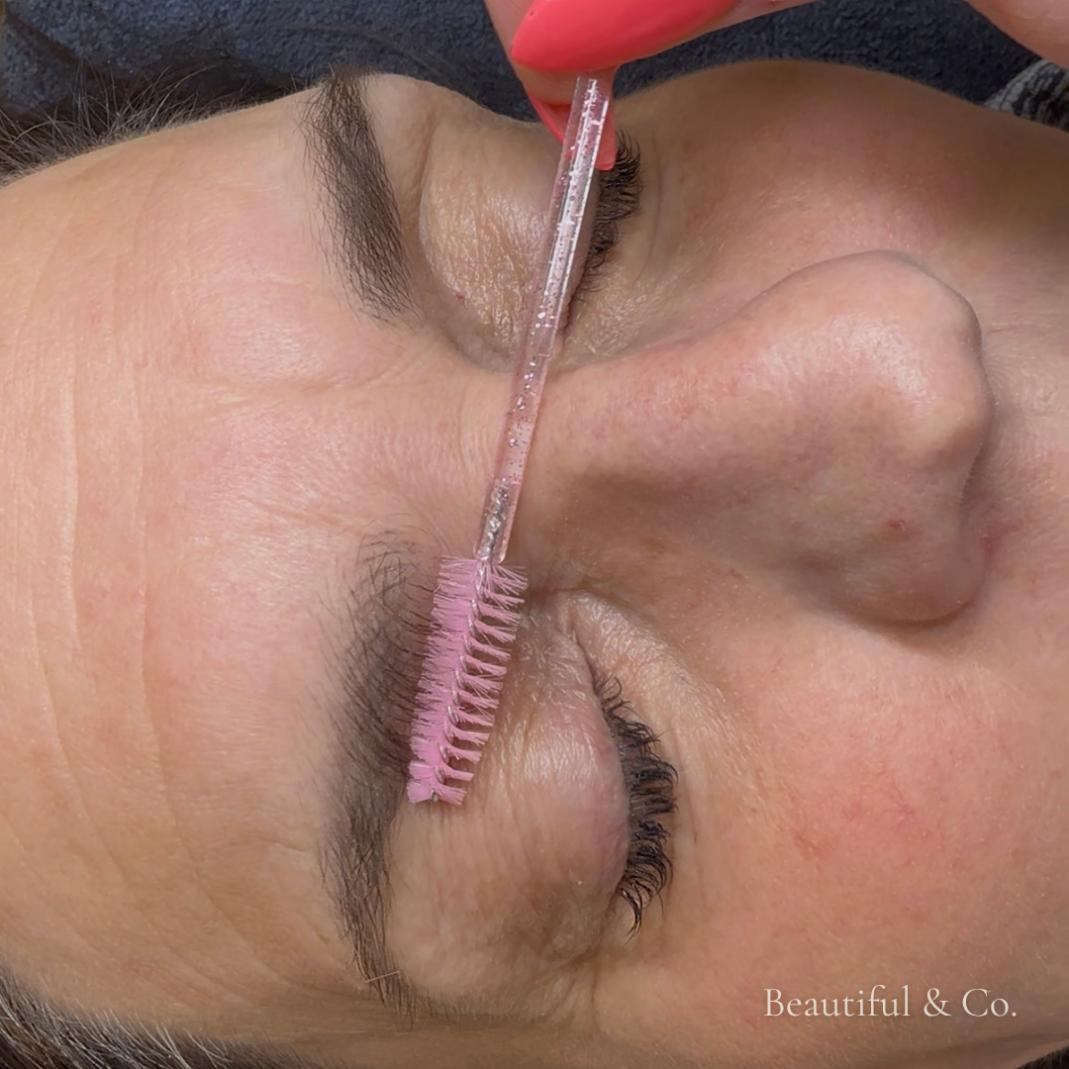
Deciding to get cosmetic tattooing is exciting — but if it’s your first time, the unknowns can feel a little nerve-wracking. What do you do to prepare? Does it hurt? Why does the color change while it heals? Knowing what to expect at every stage takes the guesswork out and helps you get the best possible result. At Beautiful & Co. in Timonium, MD, we walk every client through this in person, and this guide covers the whole journey — before, during, and after your cosmetic tattooing appointment.
Before: it starts with a consultation
Every great result begins with a conversation. During your consultation, we’ll talk through the look you want, assess your skin and features, and — for brows, map the shape to suit your face; for lips or lash line, choose color and intensity together. This is also when we review your health history and make sure the timing is right for you.
If you’re still deciding whether cosmetic tattooing suits you at all, our guide on whether permanent makeup is right for you is a helpful starting point.
Before: how to prepare
A little preparation in the days leading up to your appointment helps the process go smoothly and improves how well your skin takes and holds pigment. In general, in the 24–48 hours before your appointment it’s best to avoid:
- Alcohol and excessive caffeine (both can increase sensitivity and bleeding)
- Blood thinners and certain supplements like fish oil or vitamin E, unless prescribed — never stop prescribed medication without your doctor’s guidance
- Retinol, exfoliating acids, or other strong actives on the treatment area
- Intense sun exposure, tanning, or sunburn on the area
- Waxing, threading, or tinting brows right beforehand
- Botox or fillers in the area within the couple of weeks prior
Come to your appointment well-hydrated, having eaten beforehand, and with clean skin free of heavy makeup on the area. We’ll give you a personalized prep list at your consultation, since details vary by service and by person.
During: what the appointment feels like
On the day, we’ll finalize your shape and color and get your approval before any pigment is placed — nothing happens until you’re happy with the plan. A numbing agent is used for comfort, and most clients describe the sensation as very manageable, more like pressure or light scratching than sharp pain. Depending on the service, the appointment typically takes one to a few hours, and we keep the whole experience calm and unhurried.
After: the first few days
Right after your appointment, the treated area will look bold and feel slightly tender or swollen — this is completely normal and temporary. Your aftercare in the first days is simple but important: keep the area clean, apply any balm or ointment exactly as directed, don’t pick or scratch, and avoid getting the area wet beyond gentle cleansing.
For the first week or so, it’s best to avoid:
- Heavy sweating, intense workouts, saunas, and swimming
- Makeup on or near the treated area
- Sun exposure and tanning
- Picking at flakes or scabs (let them shed naturally)
- Skincare actives (retinol, acids) on the area
The healing timeline, stage by stage
Cosmetic tattooing heals in fairly predictable stages, and knowing them ahead of time prevents a lot of unnecessary worry:
- Days 1–3: Color looks dark, bold, and more intense than the final result. There may be mild swelling.
- Days 3–7: The area feels dry and begins to flake or peel gently as it heals. Resist the urge to pick.
- Days 7–14: After flaking, the color often looks surprisingly light — sometimes almost like it faded away. This “ghosting” stage is normal and temporary.
- Weeks 3–4: The true color blooms back as the skin fully settles. This is your real result.
The single most important thing to remember: the color you see right after your appointment is not your final color. Reserve judgment until you’re fully healed at around four weeks.
The perfecting session
A perfecting session (also called a touch-up) about four to eight weeks after your first appointment is a normal, expected part of the process — not a sign anything went wrong. Skin heals unevenly, and this visit lets us even out color, add density, or refine the shape once everything has settled. It’s how we take a great result and make it perfect.
Long-term care
Once you’re healed, a few simple habits keep your results looking their best for as long as possible: wear SPF on the area (sun is the biggest cause of fading), keep exfoliating actives away from it, and come in for a refresh before the color fully fades rather than after. Cosmetic tattooing is semi-permanent and typically lasts one to three years — you can read more in our guide on how long permanent makeup lasts.
Frequently asked questions
Does cosmetic tattooing hurt? With numbing, most clients find it very manageable — more pressure than sharp pain. Sensitivity varies from person to person and by area.
How long is the healing process? The surface heals within about two weeks, and the color fully settles by around four weeks, which is when you’ll see your true result.
Why does the color look so dark at first, then fade, then come back? That’s the normal healing cycle. Pigment looks bold initially, lightens as the skin flakes and heals, then reappears at its true tone once settled.
When will I see the final result? Around the four-week mark, after healing and your perfecting session.
Do you offer cosmetic tattooing near Baltimore? Yes — our studio is in Timonium, MD, serving Baltimore and the surrounding Maryland area.
Ready to get started?
Knowing what to expect is half the confidence — the rest is being in good hands. Book your consultation and we’ll answer every question and design a plan that’s right for you.
This article is for general information and isn’t medical advice. Always follow the personalized preparation and aftercare instructions provided by your artist.